
How to Build a Solar System in a Cube
in praise of constraints

In the last week of August, I fractured my hand. For weeks I had stitches, a splint. I never missed a day of training–I’m scheduled to fight in late October–but I had to work with some constraints. I could practice footwork, head movement, conditioning, and punches with my lead hand. But I could not throw anything with my right hand or use my right hand to block punches. Defensively you use your backhand to parry jabs and to block hooks to the head; I had to rely on other techniques to evade those punches.
I knew I wanted to work on a few things. There are many kinds of jabs a fighter can throw. Jab to the head. Jab to the body. Double jab. Triple jab. Up jab. Stepping in with the jab. Jab as you’re moving backwards. Jabs designed to measure. Jabs designed to distract. Jabs designed to set up another punch. Jabs thrown with real power. So this was an opportunity to work on varying tempo and technique. I also found myself throwing the left hook a lot more. This was my main power shot. Left hooks to the head and to the body.
At the end of September, I was able to go back to punching with my right hand. In sparring I noticed improvement to my jab and also my left hook was coming out a little sharper. I was ripping multiple hooks with more speed than I had in the past. Over the weekend, I traveled to another gym for sparring and managed to actually roll some punches and come up with lead hooks.
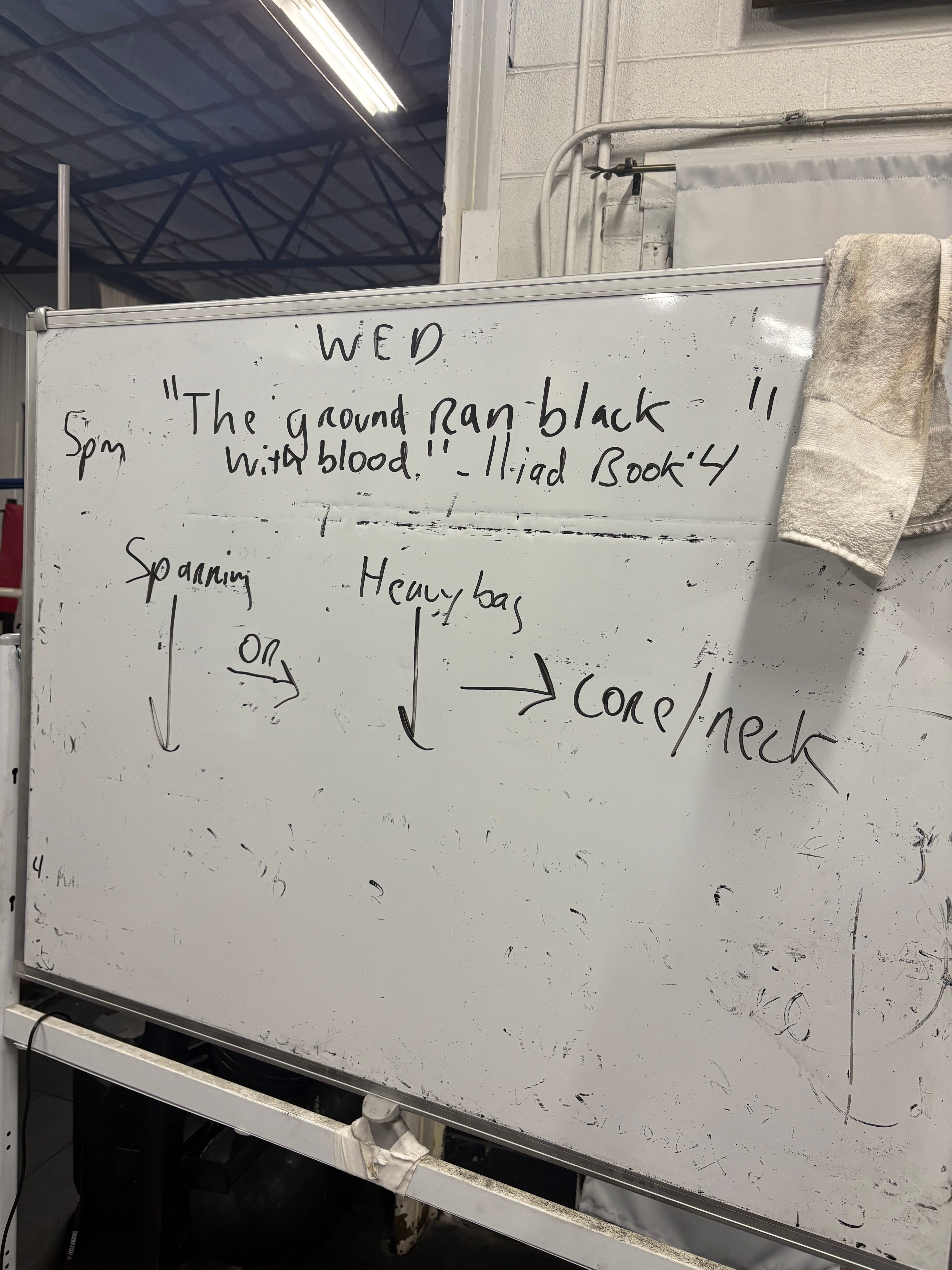
[Coach got literary for a recent sparring night]
This fall I’m teaching a speculative fiction workshop and, for the first couple of weeks, students write a short-short story (1.5K words) per week, in response to different prompts. For some writers the word count feels like running into a wall. But I believe this constraint is a valuable one. It puts pressure on our choices. It makes us think twice about where we begin and how we represent time on the page and how we use scene. What matters most to the story? What must be on the page? Students get to write long later in the semester, but for the moment the question is: how can constraint encourage innovation? So many of their stories end up making interesting moves that would not have happened, I suspect, if the writers had all the space in the world.
In this interview Helen Phillips talks about constraints: “I’m interested in the idea of the way constraints can breed creativity. In my first book, And Yet They Were Happy, I gave myself the constraint that each story had to be 340 words. It can be anything else that it wants to be, but it needs to be 340 words. And I found that very liberating, even though it’s a ridiculous constraint, because I gave myself total liberty within it.”
And then Phillips widens that picture: “The circumstances of everyone’s life are a constraint. How much time you have, how much money you have, how much energy you have. And you have to work with that.”
Yes. Exactly. One benefit to working with more intense constraints is that it teaches us how to build a solar system in a cube. How to adapt our thinking. How to innovate under pressure. Because even when the writers in the speculative fiction workshop can write as much as they like they will still probably have to navigate other constraints. Some might be creative (the demands of a particular story); others might be more material (time, deadlines, energy, headspace). The idea of being “unconstrained” is–for most of us at least–a myth.
When I was working on my first novel, Find Me, I was living in Baltimore and adjunct teaching at multiple schools. I had very little free time. One of my adjunct gigs was in DC, so I’d take the MARC train down in the morning and I came to realize that my very best slice of uninterrupted writing time was the hour or so it took to get from one city to the other. I would open my laptop and write as much as I could on the train. Or I would write in a notebook. Weird details I saw in trains cars, or through the windows, seeped into the novel. The morning MARC train became a portal. I would sit down and suddenly be inside the world of a book. A world that otherwise felt largely inaccessible to me due to busyness and tiredness and a mind that felt cluttered with logistics and student work and bills and hangs with friends and waaaay too many hangovers and hustle and worry. Yet on the morning train a clear field opened within my imagination.
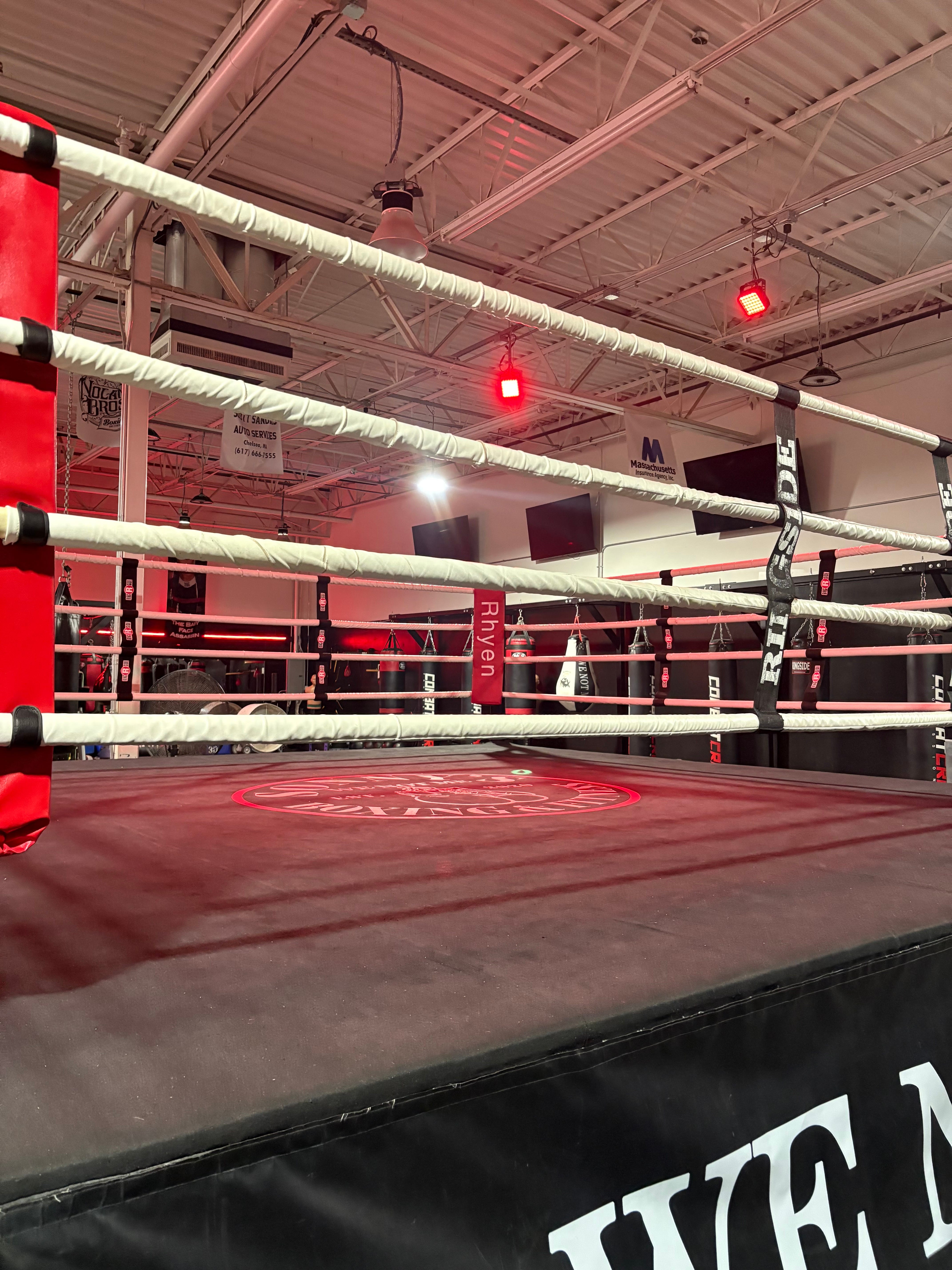
The fact of the ring is a constraint. Boxing rings are not that big. The borders are clear. As someone who moves a lot I always thought I’d like a really big ring, but last year I did some sparring at a gym in Boston that had two rings of different sizes. With the same opponent I performed better in the smaller ring, to my surprise. In the bigger ring I had trouble finding my distance, my range, and my timing was off as a result. The constraint of the smaller ring actually helped. My options were usefully narrowed.
Sometimes the constraints choose us, and sometimes we choose the constraints, as Helen Phillips did for And Yet They Were Happy. The constraints we choose can sharpen our focus, like that smaller ring in Boston. I have a lot of constraints on my time at the moment, some of which I have chosen (like training for fights) and some of which I have not. Some days it’s hard to figure out how to jenga everything into my schedule but honestly when I have loads of time I tend to just sort of fill it. And then half the time I’m like: how did I end up here and why am I doing this? The various constraints compel me to hone in on where I really want to be and who I really want to be with. It helps me move within a design that is shaped by what I need to be doing and also by what I really really want to be doing. To know that second part is to know so much.
—
A lil writing news:
I got to talk to a beloved friend and one of my favorite writers, R.O. Kwon, for The Believer. Can I tell you that I have always dreamed of having a Believer illustration? Well, now it has happened! (also: I interviewed R.O. about lifting and climbing and writing for this very newsletter over the summer).
I got to talk to numerous writers that I admire for this group conversation about publishing, publicity, connecting with readers, and MONEY for Electric Literature.
Constraints work for poetry too. 14 lines & a strict rhyme scheme, and you never know where you'll end up.
More inspiring stuff! The same thing happened to me when I was in the dojo and yet I didn’t learn a thing! 😂